|
Avoid Identity Theft and
Online Fraud
Scams such as Spoofing and Phishing to commit identity theft are becoming more
prevalent. Protecting your personal information from identity theft is a crucial
matter and there are many ways the unscrupulous can gain access to such
information. Identity theft involves the use of your personal information - such
as your name, Social Security number, credit card or bank account numbers, or
other identifying information - by someone else, to commit fraud or other
crimes.
- E-mail Phishing - Involves you receiving an
e-mail that appears to be from a legitimate company, such as Martha's Vineyard Savings Bank.
It may even include the company's logo and a link to an
Internet address that looks appropriate. This e-mail directs you to link to
a website where you are to supply account or personal information. However,
simply clicking the link could secretly install software on your computer.
The software may infect your computer with a virus or record and transmit
everything you type, including passwords. Additionally, the website you link
to may be spoofing the correct Internet site.
- Website Spoofing - Involves you trying to visit
a website but accidentally keying-in or linking-to a different address. This
may lead you to a website that mimics the legitimate site that you were
trying to visit. The spoof Internet site may route whatever information you
provide to criminals. This can include your account numbers, Social Security
numbers, credit card information, passwords and personal identification
numbers. To make spoof sites seem legitimate, criminals may use the logos,
graphics, names and code of the real company's site. They also may attempt
to fake the URL that appears in the address field at the top of your browser
window and the padlock that appears in the lower right corner.
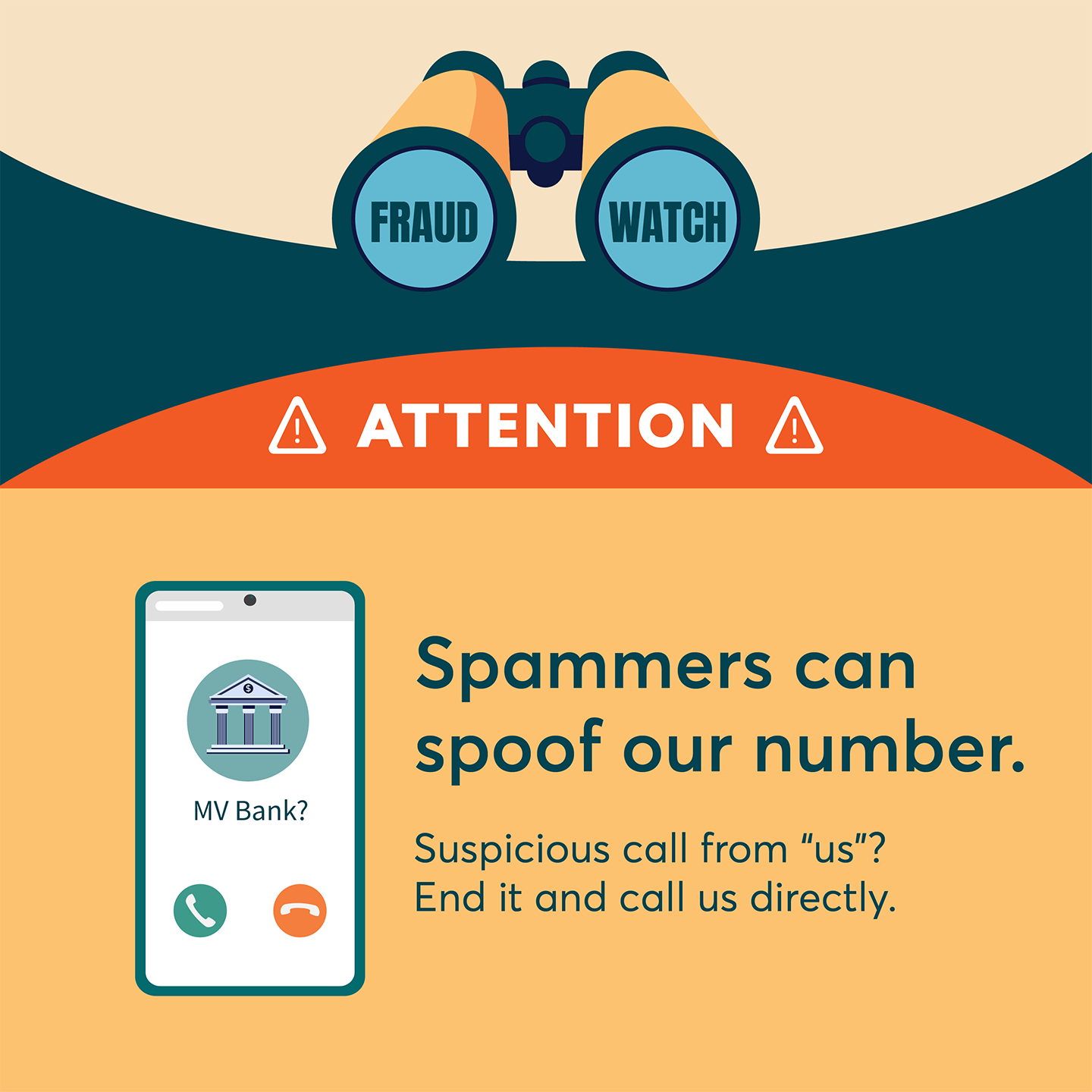
If you receive what may be a
phishing e-mail or visit what might be a spoof website referring to Martha's Vineyard Savings Bank,
and if by chance you have provided any personal information,
please contact us immediately at:
508-627-4266
If the e-mail or website had references to another
company, you should contact that company directly.
Take Control
The best advice is to be cautious and take control of your personal information.
Protect Yourself Online
- Do not reply to an e-mail or pop-up message asking for
personal or financial information. Legitimate companies like Martha's Vineyard Savings Bank
will never ask for personal or financial information via an
e-mail or pop-up message.
- Don't e-mail personal or financial information. If you
initiate a transaction, look for indicators that the message is secured,
which can be validated by a lock icon. Most e-mail programs do not provide
confidentiality via encryption.
- Use bookmarks to access known sites to avoid being
lured to imposter sites
- Use updated anti-virus software. Some phishing e-mails
contain viruses and software that can harm your computer.
Take the
E-Mail Safety Test
To stay on the safe side, simply
run these questions through your mind before opening an e-mail message.
- Do you know the sender?
- Have you safely received e-mails from
this sender before?
- Were you expecting an e-mail with an
attachment from this sender?
- Does it make logical sense that the
sender would send you the e-mail, especially if it offers an attachment or
link?
- Could it contain a virus? The only way
you will know this is to have an anti-virus program installed.
Other Ways To
Protect Yourself
- Shred unwanted documents that contain personal
information.
- Review credit card and bank statements immediately for
unauthorized charges and contact the company if statements are more than a
few days late.
- Don't leave mail in your mailbox.
- Memorize your Social Security number instead of
carrying it with you.
- Don't write down your passwords, and don't use birth
dates or names of family members as passwords.
- Take your receipts from ATMs, gas pumps, etc.
- Report lost or stolen credit and debit cards
immediately!
Fraud
Schemes
Ignore requests to send or receive
money on behalf of a government agency, a company or an individual, no matter
how attractive the offer. To learn more about these kinds of scams, go to:
Advance Fee Fraud Schemes.
Fake
Check Scams
An example of this is when a thief
would ask you to return some of the money he or she sent you using a worthless
fake check. This kind of false arrangement usually involves large amounts of
money. You can learn more on this by going to:
Fake Check Scams.
Get More
Information
For additional information on phishing and identity theft, go to the
Federal Trade Commission's Website at
www.ftc.gov
Important Contact
Information if You've Been a Victim of Identity Theft
US Government Agencies
-
Federal Trade Commission
Identity Theft Clearing House
Hotline: 877-438-4338
IDD: 202-326-2502
Website:
http://www.consumer.gov/idtheft/
- Social Security Administration
Fraud Hotline: 800-269-0271
Review Your Credit Report
Consumers should obtain a copy of their credit report for review at least once a
year.
Credit Reporting Agencies:
- Experian - www.experian.com
To request a credit report and/or to report fraud: 888-397-3742
- Equifax - www.equifax.com
To request a credit report: 800-685-1111 Option 4
To report fraud: 800-525-6285
- TransUnion Corporation -
www.transunion.com
To request a credit report: 800-916-8800
To report fraud: 800-680-7289
|